
Walk through most London neighbourhoods and you'll notice something has vanished. The tailor's shop with the faded storefront. The shoe repair place tucked beside the bakery. The seamstress who lived above her workshop. These weren't glamorous businesses, but they were infrastructure—the kind that quietly held entire systems together. Now, they're mostly gone.
This isn't nostalgia. It's a practical crisis with measurable consequences. While London produces nearly 2 million tonnes of carbon emissions annually from clothing consumption, we've simultaneously dismantled the very systems that could extend garment life and reduce that footprint. We've chosen replacement over repair, and the neighbourhood repair ecosystem has collapsed as a result.
The numbers tell a stark story. The UK's WRAP Textiles Market Situation Report 2024 found that in 2022, the UK purchased 1.42 million tonnes of textiles but discarded 1.45 million tonnes. For Londoners specifically, the pattern is relentless: 48 new items bought per year, 44 items thrown away, with 40% ending up in the waste bin. Meanwhile, the value of recovered textiles has plummeted—textile bank recoveries dropped from £406 per tonne a decade ago to £172 today, a 58% collapse in value.
But what does this have to do with the missing tailor on your high street? Everything. The repair economy didn't just disappear by accident. It was systematically starved out by economics that made it cheaper to buy new than fix old.
The Math That Broke Repair
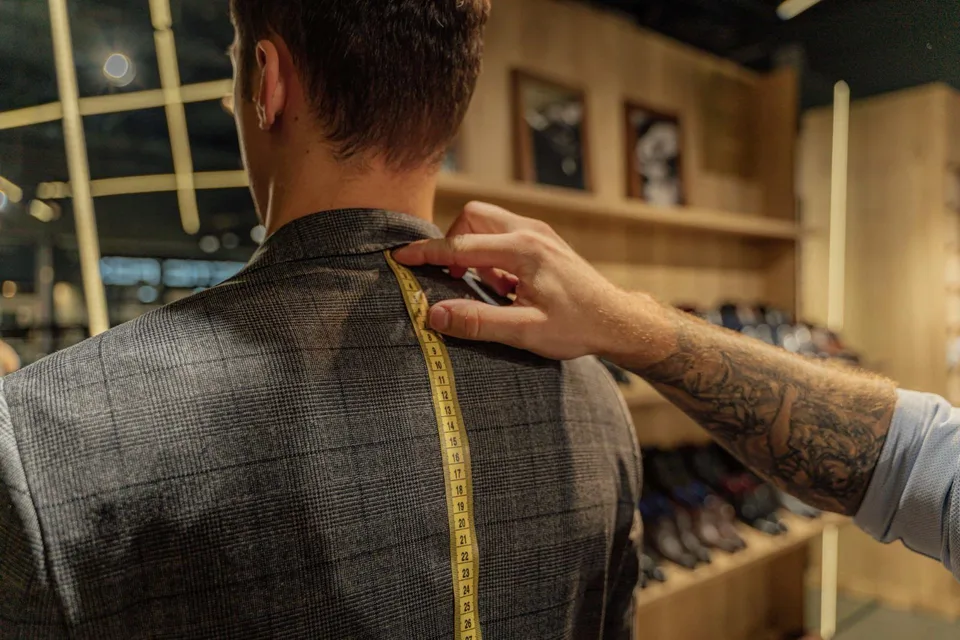
This wasn't always the case. Thirty years ago, tailors and repairers were common neighbourhood fixtures because labour was proportionally cheaper and garments were more expensive, more durable, and made to last longer. The economics flipped. Fast fashion's race to the bottom on production costs created a parallel collapse in repair value. Why would someone pay a living wage to a London tailor when the garment itself barely costs more than the labour to fix it?
The supply side has responded predictably. Training new repairers makes no sense if there's no sustainable business model. Apprenticeships in tailoring and garment repair have nearly disappeared. According to industry data, the number of working tailors and repairers across the UK has declined by more than 70% over the past two decades. In London's dense urban market, where overhead costs are highest, the collapse has been even steeper.
The result is a vicious circle. With fewer repairers, repair becomes harder to access, which pushes more people toward replacement. With less repair happening, fewer skilled workers train in the trade. The infrastructure hollows out.
The Scale of the Crisis

London's textile waste problem is enormous. Londoners discard approximately 44 garments per person annually, with 40% ending up in general waste rather than through any recovery system. That's nearly 500,000 tonnes of clothing waste from London alone—representing about 0.23 tonnes of carbon emissions per person, or roughly 2 million tonnes city-wide from clothing consumption.
Breaking this down: 49% of all used textiles in the UK end up in general waste, not recovery channels. That equates to 35 items per person per year going straight to landfill or incineration. Even when textiles are recovered, the value has collapsed. Charity shop recoveries, once worth £432 per tonne, now fetch £255—a 41% decline. Textile banks have fallen even further, from £406 to £172 per tonne.
This isn't a minor inefficiency. Textiles and clothing account for 17% of all emissions from the consumption of goods in London. Put another way: if you could halve the clothing consumption waste in the city, you'd cut consumption-related emissions by roughly 8.5%. The repair infrastructure isn't a niche issue—it's a carbon leverage point.
Yet the response has been fragmented. The UK currently has only about 14 active textile recycling firms, each averaging a maximum capacity of around 5,000 tonnes per year. That's a theoretical maximum of 70,000 tonnes annually across the entire country—when the UK generates over 1 million tonnes of textile waste per year. The system is catastrophically undersized.
Why Policy Has Been Silent

The disappearance of repair infrastructure has happened in a policy vacuum. There has been no subsidy for repair, no training investment, no systematic effort to rebuild what was lost. The market was left to solve itself—which meant there was no market solution at all, just decline.
This is finally changing. In March 2025, ReLondon published the London Textiles Action Plan, which explicitly addresses this gap. Action 2 of the plan calls to "increase the uptake of repair by subsidising the cost of professional services." This is significant: for the first time, there's acknowledgement that repair can't exist solely on market economics. It needs policy support.
The timing matters. The UK is moving toward a textile Extended Producer Responsibility (EPR) scheme, which would require manufacturers and retailers to fund the end-of-life management of textiles. The current EPR Blueprint proposes a 10p per garment fee, which could generate over £300 million annually. The blueprint explicitly prioritises investment in repair infrastructure as a medium-term outcome of this funding.
Why? Because the maths at scale are different from the maths at individual transaction level. If you want to reduce 1 million tonnes of textile waste, repair and reuse are dramatically more carbon-efficient than recycling. Repair requires minimal energy input, extends garment life by years, and preserves the embodied resources already in the garment. Recycling, by contrast, is energy-intensive and breaks down fibres, often downgrading them. Extending garment life through repair creates exponentially more environmental value than recovering that garment after it's worn out.
The Industry Response

Some parts of the fashion industry have begun to move. In April 2024, SOJO launched the Pledge to Repair initiative, urging UK fashion businesses to focus on garment repair as a core business function. The Ellen MacArthur Foundation's Fashion Mission priorities explicitly include "products designed to last longer and be repaired" and business models for repair, resale, and rental.
But these initiatives remain patchy. Most fashion companies still design for obsolescence, not durability. Repair isn't integrated into supply chains or business models at scale. The most forward-thinking brands are experimenting—offering repair services, designing for repairability, investing in repair infrastructure. But these remain exceptions rather than the norm.
The result is a strange, fragmented landscape. You have micro-repair communities emerging—local repair collectives, zero-waste focused tailors opening in niche markets. You have the occasional brand like Patagonia building repair into its model. You have community repair cafes and events. But you don't have systematic infrastructure. You don't have a neighbourhood tailor on every high street. You don't have training pipelines producing the next generation of repairers.
London's Unique Position

London is uniquely positioned to rebuild repair infrastructure, though the task is urgent. The city has the population density, skill base, and cost structure that could make repair economically viable with modest policy support. With subsidised repair services (as proposed in the London Textiles Action Plan), with EPR funding for repair infrastructure, with digital platforms connecting repairers to customers—repair could become functional again.
The London Textiles Action Plan is a start, but it needs resources and implementation. Subsidising professional repair services makes economic sense only if there's a network of repairers to subsidise. Which brings us back to training, investment, and community rebuilding.
There's also a cultural shift happening. Younger Londoners, in particular, are increasingly questioning fast fashion and looking for alternatives. The circular economy narrative is gaining traction. People want their clothing to last. They want to know the person fixing their clothes. They're interested in developing style within constraints rather than chasing newness.
This cultural shift is essential, but it's not enough on its own. You need the infrastructure to match the intention. You need accessible repair options. You need affordable pricing. You need the skills and the systems.
The Role of Exchange and Community

Repair doesn't exist in isolation. It's part of a broader ecosystem of practices that extend garment life. That ecosystem includes resale, rental, and exchange.
When a garment moves from one person to another—through resale, swap, or community exchange—it gains an additional life. That extension matters. A garment worn by two people, with basic repairs along the way, delivers roughly twice the use value per unit of environmental impact compared to a garment worn once and discarded.
This is where local community platforms become relevant. Platforms that enable local clothing swaps, community discovery of style, and connection with repair services don't solve the infrastructure crisis on their own. But they complement it. They keep garments in circulation longer. They extend the window in which repair is worthwhile. They build community around consumption choices.
The logic is straightforward: the longer a garment stays in someone's wardrobe, the more likely repair becomes economically rational. The more people exchange clothes locally, the more value garments retain in use. The more community attention you pay to your existing wardrobe, the more you notice when repair is needed rather than waiting until a garment is beyond saving.
This isn't a solution to the structural collapse of professional repair infrastructure. But it's a necessary part of the response. Scaling repair requires both professional services and community practices that keep garments valuable and circulating.
What Needs to Happen
The path forward requires three simultaneous shifts:
First, policy investment. The London Textiles Action Plan's commitment to subsidised repair is correct, but it needs actual funding and implementation targets. The UK's EPR scheme, when it lands, needs to explicitly prioritise repair funding and capacity building. Without policy money, repair infrastructure won't rebuild.
Second, training and skills. The UK needs a systematic effort to train new tailors, repairers, and garment technicians. This requires apprenticeships, funding for training programmes, and pathways to sustainable employment. This can't be left to market forces. It needs deliberate investment.
Third, systems thinking. Repair can't be treated as a standalone solution. It needs to be connected to:
- Design practices that enable repair (modular construction, replaceable components, documented techniques)
- Community practices that extend garment life (exchange, resale, collective care)
- Digital infrastructure connecting repairers to customers
- Data systems that track and measure the environmental impact of repair versus recycling versus replacement
These three elements—policy, skills, systems—create the conditions for repair infrastructure to function again. Without all three, you get isolated projects but no systemic change.
The Real Cost of Inaction
What happens if we don't rebuild repair infrastructure? We continue the current trajectory. More textile waste. Higher consumption emissions. Continued reliance on recycling as a solution, even though recycling can't process textile volumes at the scale needed and can't match the environmental efficiency of repair.
We lose knowledge. The skills required to repair clothing—to understand construction, work with materials, adapt design to individual needs—these aren't easily relearned once lost. A generation of tailors have retired. The apprenticeships are gone. The knowledge is scattered and inaccessible.
We lose economic value. London's fashion economy is built partly on local crafts and unique services. Professional repair was part of that. The loss of repairers impoverishes the city's creative and economic ecosystem.
We lose community infrastructure. The tailor wasn't just a service provider. They were a neighbourhood anchor. They understood local needs. They built relationships. They were part of the social fabric. That loss is real, even if it's not quantified in carbon calculations.
Most importantly, we miss a major lever for reducing consumption emissions. The most carbon-efficient garment is the one already made. The most efficient use is the longest use. Repair enables that. Without it, we're dependent on changing consumer behaviour (buying less) or changing production behaviour (making lower-impact clothes). Both are necessary, but neither is as effective as extending the life of garments already in existence.
The Moment Is Now
The infrastructure collapse is real. But it's not irreversible. The policy framework is beginning to shift. Funding mechanisms are being designed. Consumer interest is growing. This is the moment to rebuild.
It will require deliberate effort. It will require investment. It will require connecting repair to broader circular economy practices. But it's possible. London has everything needed except the coordination and will.
The quiet collapse of clothing repair in London has been happening for decades. The even quieter opportunity to rebuild it is happening now. Whether the city takes it will determine whether Londoners can actually wear what they buy, or whether we continue the wasteful ritual of purchase and discard that has become the norm.
Key Sources